Phonics taught step by step
The National Reading Panel (2000) found that systematic, explicit phonics beats unsystematic or no phonics (average effect 0.44).
Read the summary (National Reading Panel)"Our daughter went from knowing nothing to sounding out SAM and MA within 2 weeks!"
Early families get the first 5 lessons free. A grown-up’s name and email only, no spam.
Enjoyable, but they have no substance; in fact, they're bad for you! If your child uses them, there's a risk they will struggle to develop the deep reading skills they need.
Each lesson teaches one letter sound, then puts it to work in real words. No guessing from pictures. When your child holds “mmm” and slides into “a”, they're reading, and the train rolls on.
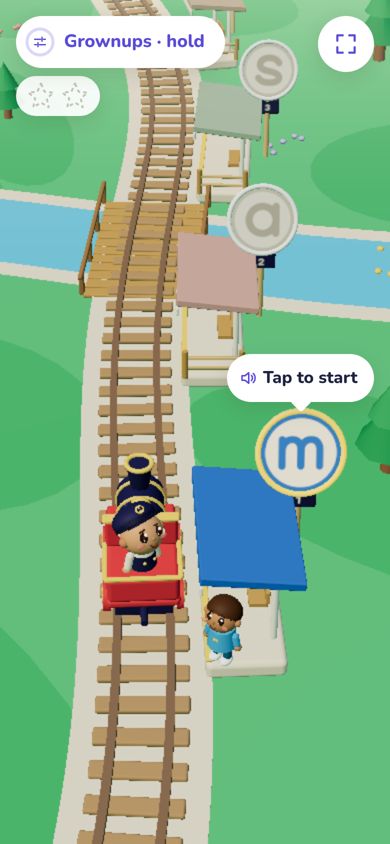
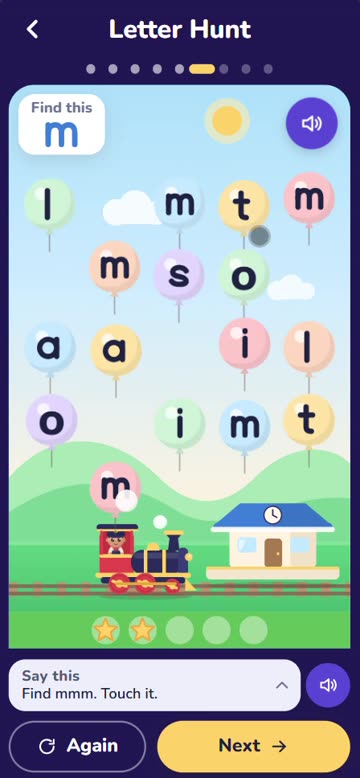
Your child meets a new letter and hunts for it in the sky.
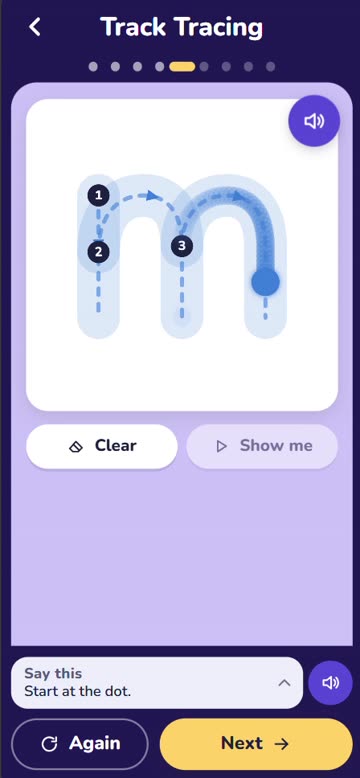
Trace it, find it, load it on the train. Short games for that one sound.
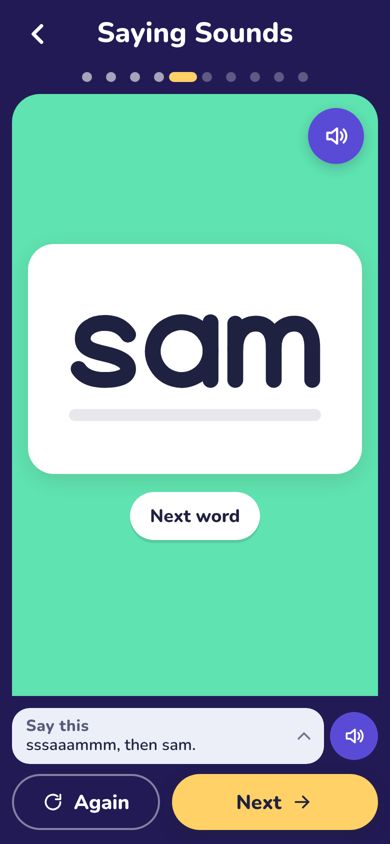
Slide the sounds together, sssaaammm, and out comes “sam”. The train pulls into the next station.
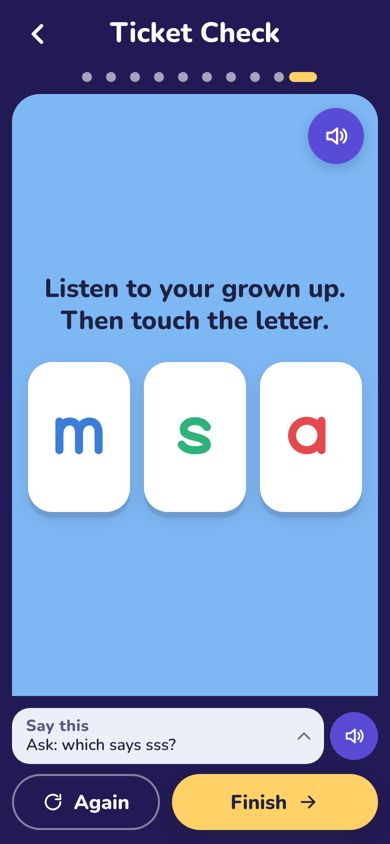

The app never talks over you and never listens to your child. A small “Say this” card shows you what to say, so yours is the voice your child hears learning to read.
Choo Choo Training is a program your kids will love, but it's built on decades of research. We designed the app first to educate, and second to entertain.
Behind each lesson are academic studies from Harvard, the National Institutes of Health, the U.S. Department of Education, and more. “What's an example?” you might ask. Here are five, with links so you can read them yourself.
The National Reading Panel (2000) found that systematic, explicit phonics beats unsystematic or no phonics (average effect 0.44).
Read the summary (National Reading Panel)Across 52 studies, Ehri and colleagues (2001) found that sound awareness helps reading more when children see the letters too.
Read the study (Ehri and colleagues, 2001)Graham and Santangelo (2014), 53 studies: spelling instruction improved reading and sound awareness.
Read the study (Graham and Santangelo, 2014)Vlach and Sandhofer (2012) confirmed that practice spread over time helps 5- to 7-year-olds remember (tested with science concepts, not reading).
Read the study (Vlach and Sandhofer, 2012)Kim and colleagues (2021), a Harvard Reach Every Reader review of 36 studies, found reading and math apps help modestly (+0.31). We say modestly because that is what the evidence shows.
Read the review (Harvard Reach Every Reader)“She asked to do more reading tonight.”
Parent of a 5‑year‑old
“Blending finally clicked on lesson 3.”
Parent of a 6‑year‑old
“I finally know what to say when he's stuck.”
Parent of a 4‑year‑old
Placeholder quotes for layout. Real ones come from Founding Families.
Lifetime access for the first 100 families, plus 3 golden tickets to give your child's best friends. Tickets stop working at Winter Break.
Get early accessChildren who are starting to learn letter sounds, usually ages 4 to 6, and older children who are stuck on blending. Some children have had success as young as two and a half.
The first 5 lessons are always free. The first 100 families get lifetime access.
About ten minutes a day, with you sitting beside your child. Each lesson has a clear finish, so it ends on a win instead of a feed of more games.
No. The app speaks but never listens. You listen to your child.
No. Open it in Chrome or Safari and add it to your home screen.